Rescheduled from original date of Saturday, March 7
With special coverage by C-SPAN!
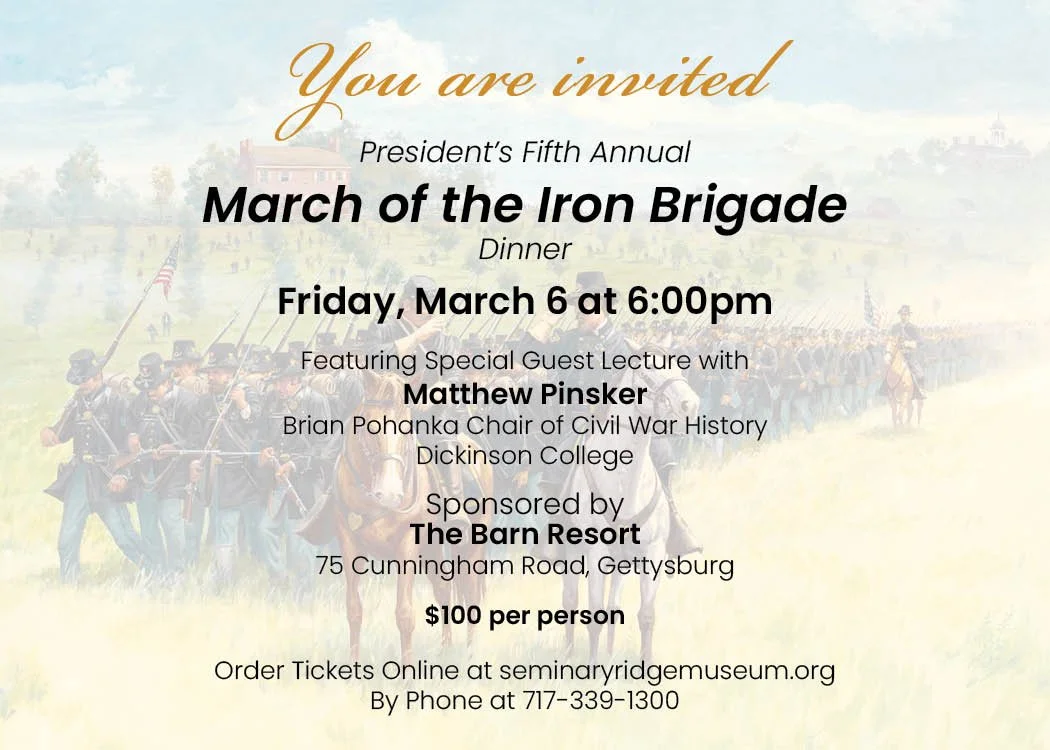
Join us for an evening of dinner, history, book signings, and more!
Dinner options include:
Espresso-Rubbed Pork Tenderloin with Apple Chutney
Brown Butter Seared Salmon with Citrus-Dill Beurre Blanc
Vegetarian (Chef’s Selection)
Cost: $100
Click here to secure your seat!
As always, members of the Iron Brigade Society will receive invitations as part of their membership benefits.
Sponsored and hosted by
The Barn Resort
75 Cunningham Road, Gettysburg
Featuring Special Guest Speaker
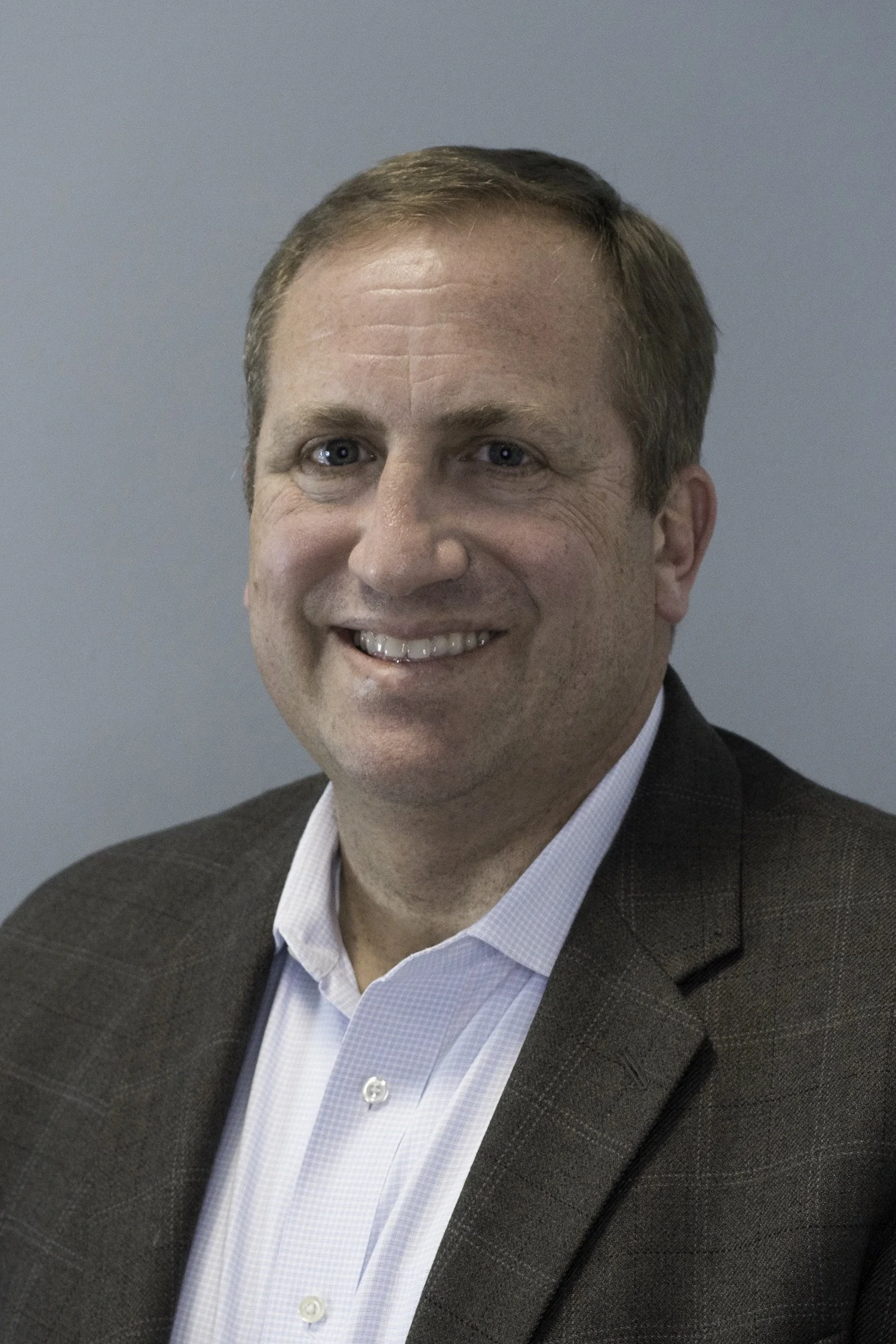
Dr. Matthew Pinsker
Brian Pohanka Chair of Civil War History
Dickinson College
discussing his recently published
Boss Lincoln: The Partisan Life of Abraham Lincoln
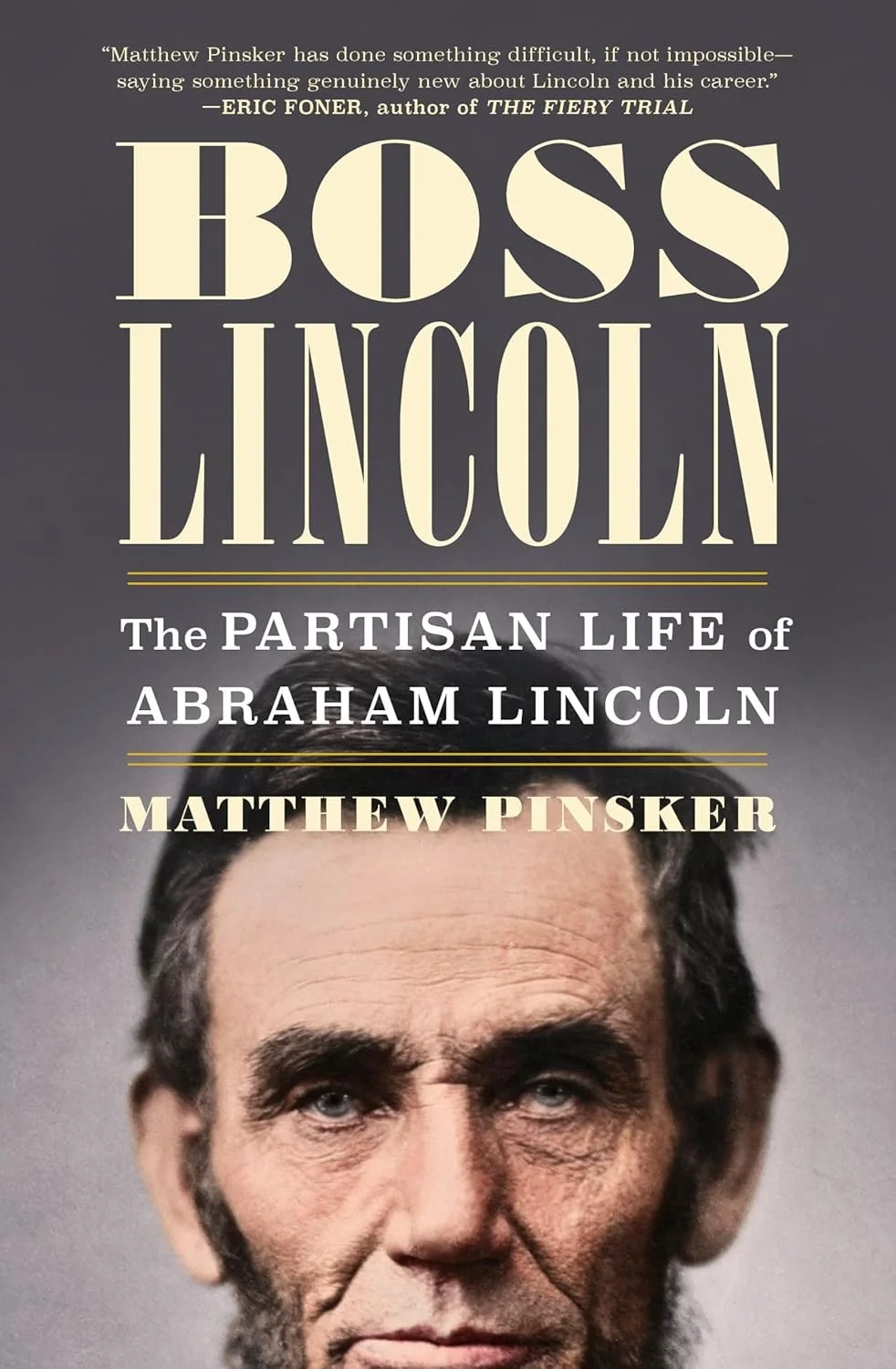
An eye-opening portrait of Lincoln behind the scenes: Here is the career-long party politician whose brilliant coalition-building during the Civil War set the political foundation for emancipation and Union victory.
We know Lincoln as the eloquent, compassionate leader of a nation torn by civil war. But he had another, less visible side, equally central to his character and leadership: Lincoln was a master of party politics. Schooled as a Whig in the rough-and-tumble of Illinois electioneering in the 1830s, Lincoln skillfully navigated treacherous partisan crosscurrents and helped build the Republican party into a viable force. His decades of experience as a party leader proved invaluable to him as president and commander in chief during the Civil War.
Matthew Pinsker’s groundbreaking history draws extensively on Lincoln’s private correspondence to move beyond the marble icon and realize a flesh-and-blood character in Boss Lincoln. Behind closed doors he was shrewd and insistent, capable of deft manipulation, blunt intimidation, or thoughtful argument as needed. As a decision-maker he was attentive to detail but kept his own counsel and trusted his own acumen. His aides noted that in cabinet meetings Lincoln had the final say, and “there is no cavil.” Devoted to elections, he kept careful, handwritten tallies of party turnout, even gifting one to Mary Todd, another partisan, during their courtship. His hymn to democracy at Gettysburg in 1863 carried a partisan message to the political leaders gathered there: The fight for the union would take place at the polls as well as on the battlefield. Boss Lincoln often sacrificed candor for purpose. He used his White House meeting with Frederick Douglass in 1864, ostensibly about emancipation, to send a message to radicals about his need for their support.
With emancipation and the war’s outcome at stake, facing withering criticism from all sides, Lincoln won reelection by building a new political coalition through the Union party. Here was Boss Lincoln at his height, captured in absorbing detail in this indelible portrait of our greatest president.
About the Author
MATTHEW PINSKER holds the Brian Pohanka Chair of Civil War History at Dickinson College in Carlisle, Pennsylvania and serves as Director of the House Divided Project (http://housedivided.dickinson.edu/sites), an innovative effort to build digital resources on the Civil War era. Matt has previously held visiting fellowships at New America Foundation, U.S. Army War College and the National Constitution Center. Matt graduated from Harvard College and received a doctorate from the University of Oxford. He is the author of three books: Abraham Lincoln –a volume in the American Presidents Reference Series from Congressional Quarterly Press (2002) and Lincoln's Sanctuary: Abraham Lincoln and the Soldiers’ Home (Oxford University Press, 2003). Matt’s most recent book is Boss Lincoln: The Partisan Life of Abraham Lincoln (W.W. Norton, 2026). He also currently produces a popular Substack series called: What Would Lincoln Do? Matt has published widely in the history of American politics, contributing to the Journal of American History and several other academic journals as well as to newspapers such as the Los Angeles Times, Philadelphia Inquirer, Washington Post, and USA Today. He appears regularly on TV channels such as C-SPAN and A&E’s History. Matt has managed multiple digital projects on the Underground Railroad for the National Park Service Network to Freedom. He has led numerous K-12 teacher-training workshops for organizations such as the National Endowment for the Humanities (NEH) and the Gilder Lehrman Institute of American History. He also currently serves the Organization of American Historians (OAH) as a “Distinguished Lecturer.” Finally, Matt sits on the advisory boards of several historic organizations, such as Ford’s Theatre Society, Gettysburg Foundation, National Civil War Museum, President Lincoln’s Cottage at the Soldiers’ Home, and the Thaddeus Stevens & Lydia Hamilton Smith Center for History & Democracy.